
Affiliate Disclosure: This post contains Amazon affiliate links. I may earn a small commission at no extra cost to you.
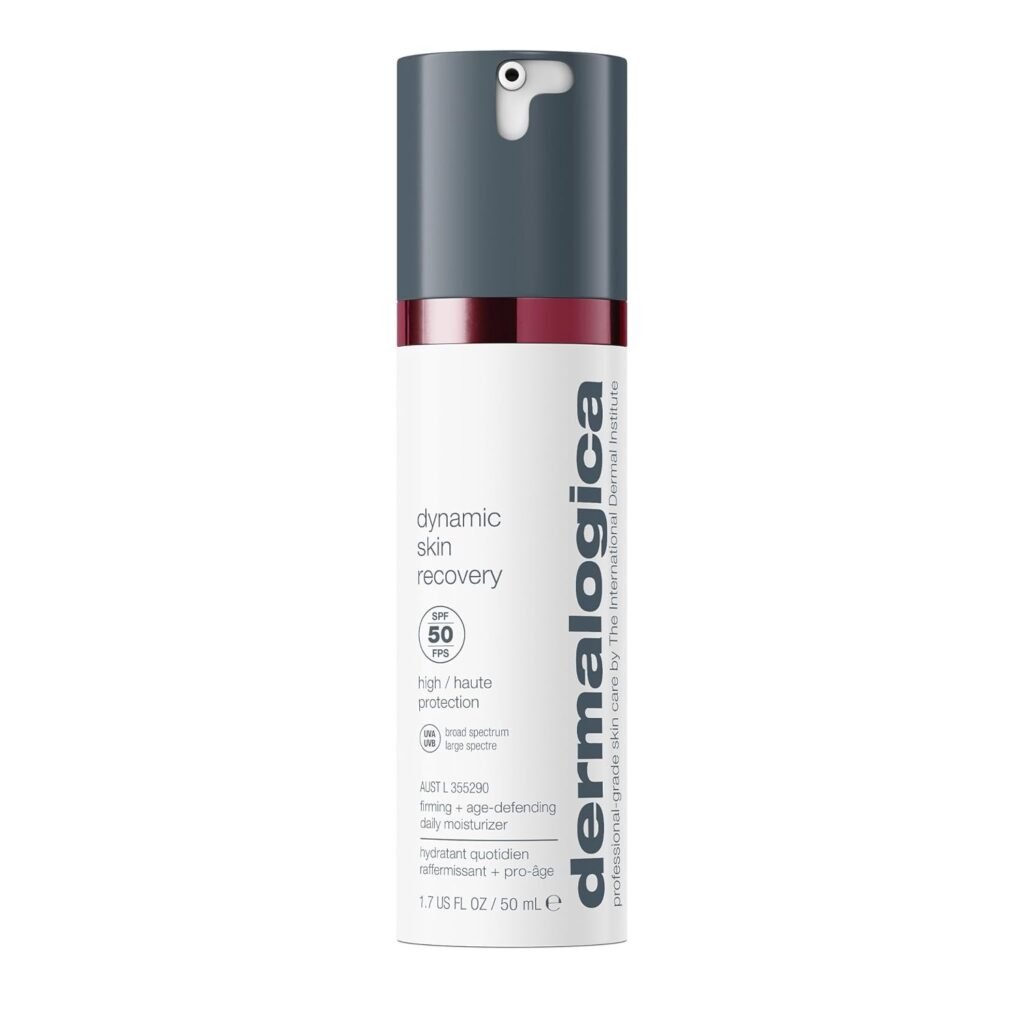
Five weeks ago I got tired of the same morning routine everyone with “mature-ish” skin knows too well: moisturizer, wait, then a separate sunscreen layered on top, then wait again before makeup would even sit right. Some mornings I skipped the second step entirely because I was running late — which, if you know anything about sun damage, is exactly the habit that catches up with you by your late 30s. So I switched to a single 3-in-1 product that claims to moisturize, firm, and protect in one step: the Dermalogica Dynamic Skin Recovery SPF50. Here’s what actually happened after five weeks of daily use, including the parts the marketing copy conveniently leaves out.
What Is Dermalogica Dynamic Skin Recovery SPF50?
If you’re looking for a single product that moisturizes, fights aging, and protects your skin from the sun, this is one of the more credible options available in 2026. It’s a medium-weight daily moisturizer that combines broad spectrum SPF50 protection against both UVA and UVB rays with a peptide blend aimed at firming and antioxidants meant to buffer environmental stress — all in one non-greasy formula that’s meant to replace, not supplement, your regular morning moisturizer.
It’s a product that shows up constantly in professional skincare circles — the kind estheticians recommend rather than the kind that goes viral on social media first. That distinction matters, because it usually means the formula has been quietly reliable for longer than a single hype cycle.
The one-sentence version: if you currently apply moisturizer and sunscreen as two separate steps and sometimes skip the second one, this collapses both into a single habit you’re far more likely to actually stick to every single morning.
My 5-Week Testing Notes
The texture took about two days to get used to. It sits noticeably thicker than a typical lightweight sunscreen, closer to a rich daily moisturizer, and my skin needed a minute to fully absorb it before I could layer makeup on top without it pilling. By day three I stopped noticing the texture entirely, and there was zero white cast under makeup — even in flash photography, which is usually where chemical-filter formulas either prove themselves or fall apart.
The real test was a beach weekend in week three. No sunburn despite several hours outdoors, no greasy breakout along my hairline (a classic tell for heavier SPF formulas), and my cheeks — which usually go tight and flaky by mid-afternoon regardless of what I use — actually felt comfortable by the end of the day. I did notice a light film if I skipped blotting before reapplying around hour four, which tells me this performs best when reapplication is planned for rather than an afterthought.
By week five, the more interesting result wasn’t the sunscreen performance — it was that my skin looked slightly firmer around the cheeks and less prone to the midday dullness I’d normally blame on stress or bad sleep. I can’t credit that entirely to one ingredient, but it lines up with what the peptide blend is formulated to do over a period of weeks, not overnight.
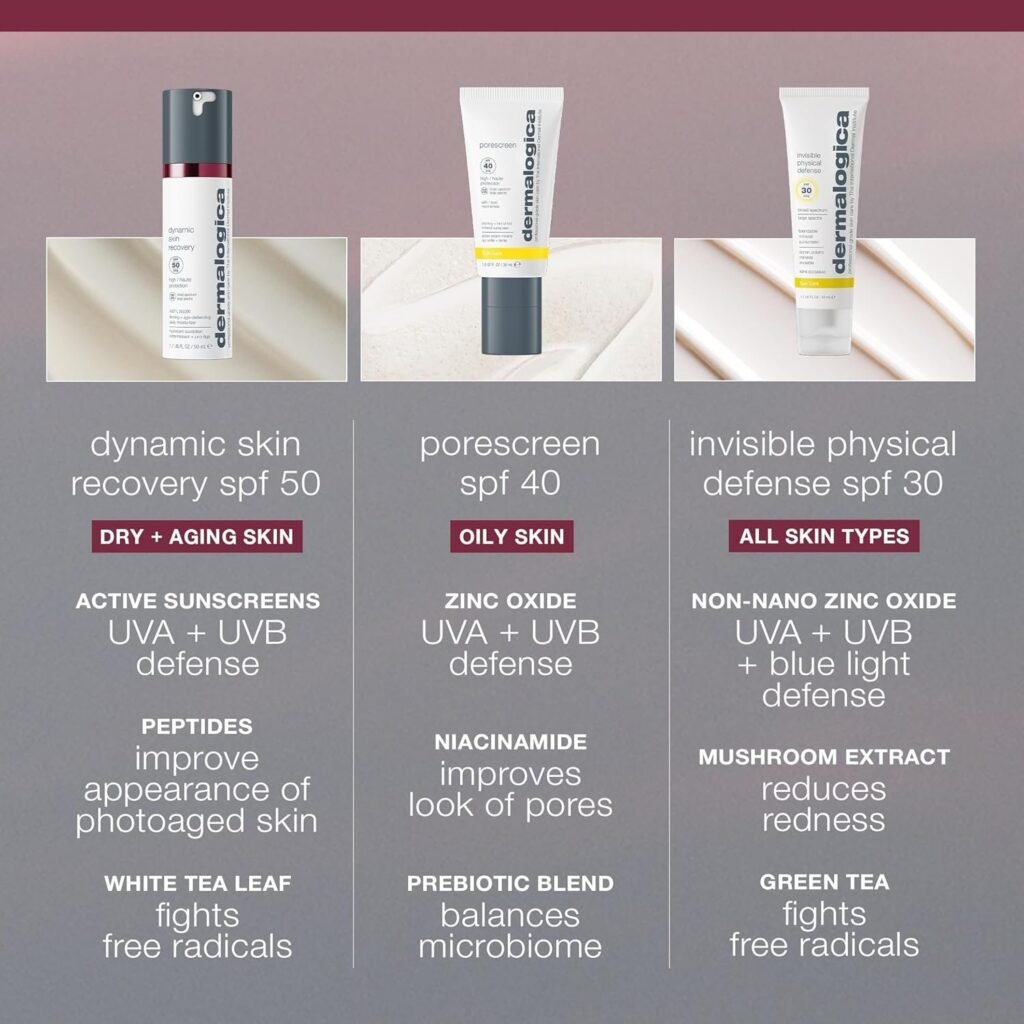
Dermalogica Dynamic Skin Recovery SPF50
Why it earns this spot: it’s the rare 3-in-1 that doesn’t quietly underperform at any one of its three jobs — the SPF50 is a genuine broad spectrum formula, the peptide blend has enough evidence behind it to matter, and the texture actually disappears once it’s absorbed.
Best for: dry to normal skin, anyone tired of double-stepping moisturizer and sunscreen, and makeup wearers who need a smooth, non-pilling base.
Not for you if: you have very oily or acne-prone skin, or fragrance sensitivity — this isn’t a fragrance-free formula.
Check Price on Amazon →Key Ingredients — What Makes It Work
Broad Spectrum SPF50 (Avobenzone, Octocrylene, Homosalate)
Multiple chemical UV filters work together to deliver broad spectrum protection against both UVA and UVB rays. SPF50 is one of the higher levels available in a daily moisturizer, which matters most for anyone concerned about sun damage, premature aging, or hyperpigmentation.
Polypeptide Blend
A peptide complex formulated to visibly firm skin and improve the appearance of photoaged skin. Peptides support the skin’s own collagen-related processes, which is why this reads as more than “just a sunscreen” on the label.
White Tea Extract
Rich in polyphenols, white tea acts as an antioxidant that helps buffer free radical damage from pollution and everyday environmental stress — a bigger concern in cities than most people realize.
Glycerin, Urea & Squalane
These humectant and emollient ingredients deliver long-lasting hydration without heaviness, which is a big part of why this can replace a separate moisturizer rather than sit on top of one.
Chemical vs. Mineral SPF: Why This One Goes Chemical
Dynamic Skin Recovery uses chemical UV filters rather than mineral filters like zinc oxide or titanium dioxide. That choice is exactly why it blends so seamlessly under makeup with no white cast — but it’s worth understanding the tradeoff before you commit.
| Filter Type | Strength | Tradeoff |
|---|---|---|
| Chemical (this product) | No white cast, blends invisibly under makeup, lightweight feel | Can irritate very reactive or rosacea-prone skin; not reef-safe |
| Mineral (zinc oxide, titanium dioxide) | Gentler on reactive skin, reef-safe, sits on top of skin rather than absorbing | Can leave a visible cast, often thicker or chalkier texture |
If you have very sensitive or reactive skin, patch-testing this on your inner arm for 24 hours before applying it to your face is a smart precaution — the fragrance and chemical filter combination is the most likely source of irritation for anyone prone to breakouts from new skincare products.
Pros & Cons
✅ Pros
- SPF50 — one of the higher daily sun protection levels available
- Genuine 3-in-1: moisturizer, sunscreen, and anti-aging in one step
- Medium-weight, non-greasy formula
- Zero white cast — reliable under makeup
- Peptide blend supports firming over time
- White tea antioxidant protection against environmental stress
- Professional-grade formulation, widely used by estheticians
- Works well for dry and mature skin types
❌ Cons
- Premium price point compared to drugstore SPF moisturizers
- Chemical filters may irritate very sensitive or reactive skin
- Contains fragrance — not a fragrance-free formula
- Can feel rich for very oily skin types
- Not reef-safe due to chemical UV filters
Who Is This Best For?
This earns its spot for dry and mature skin that needs hydration and sun protection in the same step, for anyone focused on anti-aging in their 30s, 40s, or beyond, and for daily sunscreen users who want to simplify their morning routine down to fewer steps. It also works well for hyperpigmentation and dark spot prevention, and for makeup wearers who need a smooth, non-pilling base layer.
It’s a poor match for very oily or acne-prone skin, where the medium-weight texture can feel heavier than needed, and for anyone with fragrance sensitivity, since this isn’t formulated as fragrance-free.
How to Use Dermalogica Dynamic Skin Recovery SPF50
- Cleanse and tone your face and neck
- Apply any serums first and let them fully absorb
- Take a generous, nickel-sized amount of Dynamic Skin Recovery
- Apply to face and neck using upward strokes
- Apply at least 30 minutes before sun exposure for full protection
- Reapply every 2 hours if you’re outdoors for an extended period
Pro tip: layer it over the Sunday Riley C.E.O. Glow Face Oil for a brightening-plus-SPF-protection morning combo that covers both tone and sun defense in one routine.
Common SPF Moisturizer Mistakes That Quietly Reduce Protection
Even a well-formulated SPF50 underperforms if it’s applied incorrectly, and the most common mistake by far is using too little product — most people apply less than half the amount needed to hit the labeled SPF rating. Dermatologists generally recommend a nickel-sized amount for the face and neck alone, which feels like noticeably more than most people are used to applying as a daily moisturizer.
Skipping reapplication is the second big one. SPF protection degrades with sweat, water exposure, and simple friction against clothing or a phone screen throughout the day — if you’re outdoors for more than two hours, a single morning application won’t carry you through the afternoon at full strength. Applying it as the very last step after makeup also reduces effectiveness, since SPF needs to sit directly against clean skin to form an even, protective film rather than being trapped under other products.
A third, less obvious mistake: assuming a higher SPF number means you can be careless about timing. SPF50 blocking slightly more UVB than SPF30 doesn’t buy you unlimited time outdoors — it buys you a larger margin for error when application is uneven, not a free pass to skip reapplication altogether.
Advertisement
Frequently Asked Questions
Do I still need a separate moisturizer if I use this?
For most skin types, no — this is formulated as a genuine 3-in-1 product. Very dry skin in winter months might benefit from layering a hydrating serum underneath, but a separate daytime moisturizer is generally redundant.
Is SPF50 actually meaningfully better than SPF30?
SPF30 blocks about 97% of UVB rays while SPF50 blocks about 98% — a smaller jump than the numbers suggest. The bigger benefit of SPF50 is the larger margin for error when application is uneven or reapplication is delayed, which is common in real-world daily use.
Can I use this under heavier makeup without pilling?
Most reviewers, myself included, get a smooth base with no pilling, provided you give it 60–90 seconds to fully absorb before applying foundation or concealer on top.
How does it compare to a dedicated anti-aging serum?
It’s not a replacement for a dedicated retinol or peptide serum if active anti-aging treatment is your priority — think of it as a protective daily layer that prevents further sun-related aging while delivering a lighter dose of peptides and antioxidants on top.
Will this work in humid summer weather without feeling heavy?
It held up better than expected through a humid beach weekend, though anyone with naturally oily skin may still notice more shine by midday than they would with a lighter, gel-based SPF.
Final verdict: if simplifying your morning routine without sacrificing real SPF protection is the goal, this earns its price tag. It won’t replace a dedicated retinol or peptide serum, but as the daily foundation layer that protects everything else you put on top of it, it’s one of the smartest single purchases you can make for long-term skin health.
What to Read Next
Brightening Pairing
The Foundation
Disclosure: This post contains affiliate links. If you purchase through them, I may earn a small commission at no extra cost to you. I only recommend products I’ve genuinely researched and would use myself.