

Here’s the truth nobody puts on the front of a serum bottle: buying more products isn’t what builds healthy skin. What actually works is understanding how your skin is built, why it acts up in the first place, and which ingredients earn a spot in your routine based on evidence, not marketing. That’s the entire idea behind this blueprint — one place that walks through the structure, the science, and the specific products worth your money for whatever your skin is dealing with right now.
If you take one thing from this guide, let it be this: the strongest routine isn’t the one with the most steps. It’s the one your skin can actually tolerate and you can actually stick with.
What’s Inside
How Your Skin Is Built
Your skin is your body’s largest organ, and it’s doing a lot more than sitting there looking like skin. It controls moisture, regulates temperature, fights off environmental threats, and gives you a sense of touch — all through three distinct layers working together.
Epidermis
The outer, protective layer. Inside it sits the stratum corneum, a brick-and-mortar structure where ceramides act as the mortar, binding skin cells together and keeping water from escaping. This is the layer most skincare products are actually talking to.
Dermis
The support structure underneath, home to collagen and elastin (your firmness and bounce) plus the sebaceous glands, whose overactivity is often behind acne breakouts.
Hypodermis
The deepest layer, made of fat cells that cushion and insulate. Volume loss here over time is a big part of why skin starts to look like it’s sagging with age.
Skin’s Essential Jobs
- Protects against bacteria and environmental damage
- Prevents excessive water loss (TEWL)
- Regulates body temperature
- Supports immune defense
- Provides sensation through nerve endings
Why Skin Problems Happen
Internal Factors
Genetics and skin type determine whether you run oily, dry, combination, or sensitive, and affect how much collagen you produce and how prone you are to acne or rosacea. Hormonal shifts influence sebum, inflammation, and hydration — which is exactly why breakouts tend to show up around puberty, your cycle, pregnancy, or menopause. And as you age, collagen production slows, cell renewal drags, oil output drops, and moisture retention declines, leaving skin thinner and slower to bounce back.
External Factors
Sun exposure is one of the single biggest drivers of premature aging, uneven pigmentation, and long-term damage — daily sunscreen remains the most evidence-backed thing you can do about it. Pollution generates free radicals that accelerate aging, which is where antioxidants like vitamin C help neutralize daily oxidative stress. And harsh cleansing strips natural oils and disrupts your barrier, often causing the exact problems you’re trying to fix.
The Skin Barrier: Your Protective Shield
Your skin barrier is built from ceramides, cholesterol, fatty acids, and natural moisturizing factors. Ceramides alone make up roughly half of your outer skin layer — they’re the mortar holding the whole wall together.
Signs of a Damaged Skin Barrier
- Dryness — skin loses water and turns rough
- Sensitivity — products cause burning or stinging
- Flaking — uneven texture from reduced moisture
- Tight feeling — discomfort after cleansing
- Increased irritation — stronger reactions to your environment
What Actually Damages the Barrier
Too many actives at once can overwhelm skin and break down its protective structure. Over-exfoliation — daily scrubbing, stacking multiple acids — causes cumulative damage. And using the wrong products for your actual skin type, rather than the skin type you wish you had, is one of the most common (and avoidable) causes of barrier trouble.
5 Steps to Support Barrier Repair
A barrier-supporting routine covers five specific bases. Get these right before layering on anything more aggressive. For a deeper walkthrough of exactly what a damaged barrier feels like and the full repair timeline, see Your Skin Barrier Is Broken — Not Your Skincare Routine.
-
1
Gentle cleansing
Mild, non-foaming or low-foam, ideally fragrance-free. Removes impurities without stripping natural oils.
-
2
Ceramides
Essential skin lipids that restore barrier integrity and reduce water loss.
-
3
Glycerin
A humectant that pulls water in from the air. Works for every skin type.
-
4
Hyaluronic acid
Holds water at multiple layers. Works best applied to damp skin and sealed with moisturizer.
-
5
Niacinamide
Supports barrier function, evens out skin’s appearance, and calms redness.
Acne-Prone Skin: What Actually Worked for My 19-Year-Old
Acne develops when hair follicles get blocked with oil, dead skin cells, and inflammation-triggering buildup — it’s not caused by dirty skin, and harsh cleansing usually makes it worse. I learned that the hard way with my daughter. When her breakouts got worse around sophomore year, my first instinct was to hand her whatever was in my own skincare cabinet. Big mistake — what works on 40-something skin can wreck 19-year-old skin. So we started over, slowly, and tracked what actually happened over about ten weeks.


The mistake we made first: she layered a drugstore 2% salicylic acid serum on top of all this, thinking more active ingredients meant faster results. It backfired — flaking, stinging, one bad week where her skin looked worse than before we started. We dropped it and stuck to the three products above. At this age, consistency with fewer products beats stacking actives every time.
Dry Skin: Understanding Moisture Loss
Dry skin happens when your skin can’t hold onto adequate moisture — usually from a weakened barrier, harsh environmental conditions, or naturally low oil production. Three ingredients do most of the heavy lifting here: ceramides restore barrier structure and are the first choice for damaged skin, glycerin draws moisture in and works for every skin type, and squalane softens skin and reduces moisture loss without feeling heavy, even on oilier skin.


Sensitive Skin: When Skin Becomes Reactive
Sensitivity often isn’t permanent — it can simply mean your barrier has weakened, and a simplified routine can help it recover.
-
1
Gentle cleanser
Fragrance-free, low-foam. Skip anything with SLS sulfates.
-
2
Simple moisturizer
Fragrance-free, built around ceramides, glycerin, or squalane.
-
3
Daily sunscreen
Mineral formulas (zinc oxide or titanium dioxide) tend to be better tolerated.
-
4
Limited actives
Introduce one new active at a time, at least a week apart.
Uneven Tone & Aging: Building My Wife’s Routine at 27
Uneven tone is usually driven by sun exposure, post-acne marks, or hormonal shifts, and the honest truth about aging skin is that 27 is the age where the damage is already happening — you just can’t see it yet. My wife’s approach going in was basically “nothing hurts yet, so why bother.” Which is exactly the trap. We built her a genuinely minimal routine, specifically because she’d never stick to anything complicated.


What surprised us: she assumed retinol was the “real” anti-aging move and almost skipped straight to it. We held off — at 27, with no fine lines yet, vitamin C plus consistent SPF is doing more real, provable work than retinol would right now. Retinol earns its place later; this is the decade for prevention, not correction.
Aging Skin: Supporting Healthy Skin Over Time
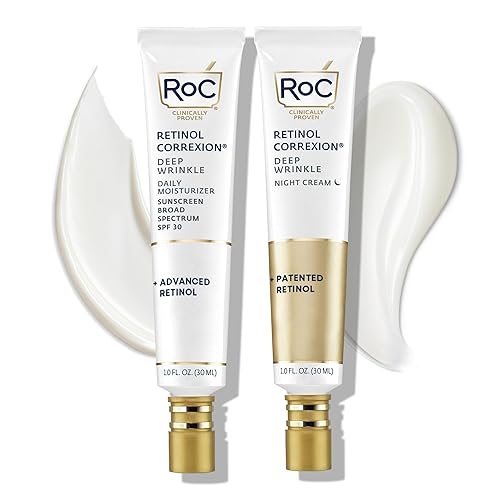
A good anti-aging routine isn’t about chasing miracle ingredients — it’s about protecting what you have and preventing unnecessary damage from UV, pollution, and moisture loss. Retinol and retinoids remain among the most researched anti-aging ingredients available; introduce gradually (every third night, then every other night, then nightly) to avoid overwhelming your barrier. Sunscreen is still the single most effective anti-aging step you can take — the Dermalogica Dynamic Skin Recovery SPF50 review covers a combined SPF-plus-peptide option. And peptides, short amino acid chains, support collagen signaling over time — see our guide to copper peptides and Matrixyl for more.

Skincare Ingredients, Explained
Hydrating: hyaluronic acid holds many times its weight in water — apply to damp skin and seal with moisturizer. Glycerin attracts water and works for dry and sensitive skin alike.
Barrier repair: ceramides maintain barrier structure and are the first-choice ingredient for dry, sensitive, or damaged skin. Alongside them, cholesterol and fatty acids round out the trio your skin naturally uses to stay strong.
Treatment: retinoids need a careful, gradual introduction with daily sunscreen. Vitamin C works best in the morning for antioxidant protection. Exfoliating acids clear away dead skin cells — AHAs (glycolic, lactic) target texture and dullness, while BHA (salicylic) targets pores and oily skin.


Ingredient Cheat Sheet
| Ingredient | Main Benefit | Best Skin Type | When to Use |
|---|---|---|---|
| Ceramides | Barrier repair | Dry, sensitive, damaged barrier | AM & PM |
| Hyaluronic Acid | Hydration | All skin types | AM & PM |
| Niacinamide | Barrier + oil balance | Oily, acne-prone, uneven tone | AM & PM |
| Salicylic Acid (BHA) | Pore clearing | Oily, congested, acne-prone | PM (start 2–3x/week) |
| Glycolic/Lactic Acid | Texture & dullness | Normal, combination | PM (start 2–3x/week) |
| Vitamin C | Antioxidant & brightening | Dull, uneven tone | AM only |
| Retinoids | Renewal & anti-aging | Most types (introduce slowly) | PM only |
| Peptides | Firming & collagen support | Aging, mature skin | AM or PM |
| Sunscreen SPF 30+ | Damage prevention | Everyone, every day | AM (final step) |
The Golden Rule of Active Ingredients
More actives don’t automatically mean better results. Choose the right ingredient, use the correct frequency, give skin time to adjust, and protect barrier health throughout. The strongest routine isn’t the most complicated one — it’s the one your skin can tolerate and you can actually follow.
Frequently Asked Questions
How long does skin barrier repair actually take? A mildly disrupted barrier can start feeling more comfortable within one to two weeks. More significant damage often takes four to six weeks of a simplified routine before it fully stabilizes.
What’s the correct order to apply skincare products? Thinnest to thickest: cleanser → treatment serums → hyaluronic acid → moisturizer → sunscreen (always the last step in the morning).
Can I use vitamin C and retinol in the same routine? Yes, but separate them — vitamin C in the morning for antioxidant protection, retinoids at night for renewal. Combining them in the same application can increase irritation risk.
How many active ingredients should I use at once? One or two targeted actives alongside a gentle cleanser, barrier-supporting moisturizer, and daily sunscreen is usually plenty. Add anything new one at a time, spaced about a week apart.
Is sensitive skin permanent, or can it improve? Often it’s not permanent — sensitivity frequently reflects a temporarily weakened barrier that improves with a gentler, more consistent routine.
Do I need sunscreen every day, even indoors? Yes. UV exposure accumulates through windows and on overcast days, and it remains one of the leading causes of premature skin aging.
The Honest Verdict
Healthy skin isn’t built on trends, miracle ingredients, or buying more products. It comes from understanding your skin’s structure, protecting your barrier, and choosing a small set of evidence-based ingredients you can actually stick with. Start with the basics — gentle cleansing, barrier support, and daily sunscreen — before layering on anything more targeted.
Ready to put this blueprint into action? Start with whichever barrier-repair step matches your skin’s biggest concern right now, and build from there.
What to Read Next
Deep Dive: Barrier Repair
Real Story: Retinol & Barrier Damage
I Quit Retinol. Then I Found the One Ratio That Explains Everything.
Skincare Science
Advanced Skincare
Disclosure: This post contains affiliate links. If you purchase through them, we may earn a small commission at no extra cost to you. We only recommend products we’ve genuinely researched.